Fragmentization of Consumer Tech

images

In the heyday of Facebook (we can debate that later…), it served as a platform for everything: sharing photos, inviting friends to events, status updates, messages, etc. What started as a simple service began adding until it hugged every possible social function imaginable.

And then, things started to fragment. Entrepreneurs parsed out various aspects of Facebook and decided to take a siloed approached to each of the services Facebook did so well. Enter Instagram, Twitter, Eventbrite, contact applications like Brewster and others. And as time moves along, it seems that these services become derivatives of themselves (Snapchat, Jelly, Secret). Consumer technology seems to be moving only in the direction of even more fragmentation.

Consumer tech giants like Facebook and Google want to get ahead of this trend by fragmenting their own products before others are able to do so themselves. Their M&A and product goals seem to corroborate this hypothesis. Facebook’s purchase of WhatsApp and attempted buyout of Snapchat is only the beginning. Google’s Hangouts app is a great example of the phenomenon. And as of this week, Facebook announced that the mobile app will no longer allow for messages in-app, but instead users must download a separate app to send Facebook messages to their friends. They also tried this strategy with specific apps that flopped, like Poke and Messenger v1.

As for the future? It seems these things go in cycles. I predict that after a poor user experience that fragmentation provides, these consumer products will consolidate once again to make a user experience easier. For the time being, products like IFTTT is a great example of how users will skirt some of the problems fragmentation poses.

Would be curious to hear people’s thoughts on standalone products from within large companies?

Fragmentization of Consumer Tech

My Favorite Interview Questions

giphy

I should start by saying that I’m not taking a dose of my own medicine here, but I have been speaking to several friends over the last few weeks about best practices for finding a new job and interviewing at various companies. I wrote a blog post about a year ago that details my thoughts on making the transition from banking to tech, which I believe are mostly still applicable. So in this post, I will not focus so much on the job-finding but rather the second step of the process: interviewing.

Most companies begin with a phone screen: a conversation with a recruiter. But the hiring manager or members of the team will eventually sit on a panel to question the candidate. Interview questions are generally role-specific, but there are some questions that are generally applicable across most jobs. Here are some of my favorite interview questions that you should be sure to have answers to, beyond the standards “why do you want this job”-type questions:

1. (For early stage companies): What value do you derive from the product? What feedback do you have on the product? Alternate versions of this question include What are your favorite/least favorite aspects of the product? This one is a giveaway. If you’re interviewing at a company, you should be a user of the platform, a reader of the blog, a subscriber of the service, etc. If you can’t afford it, you should at least have gotten a demo or signed up so that you know what the system entails. If you can’t speak elegantly about the product and form your own opinion about what you like and what should change, you probably won’t be a valuable asset to the company. Pro-tip: for more established companies, questions about “the product”, be it a newspaper, a physical good or service, or a mobile app, you must be able to speak knowledgeably about what exists, and your opinion on it.

2. What do you think of the revenue model? How can our company catapult revenue?  You should be able to explain the revenue model swiftly and in a few concise sentences. Regardless of the position you are interviewing for, know how the company makes money (where applicable).

For the second segment of the question, the key is to think outside the box. I don’t want to hear about how we already make money or monetization channels that already exist. Instead, you should be extrapolating what you know about the industry, competitors or general macro factors to make a suggestion about additional sources of income.

3. What are your favorite companies in the space? What do you think about ___ trend? This is a test of how well you know the industry in which you claim to want a job. Especially if you’ve never had a job in the field in which you’re interviewing, know about the trends: what’s favorable, what’s not, and how that applies to the company and people with whom you’re speaking. Understand how the trends affect this particular idea or product, and definitely have an opinion on it. Learn about not only what the popular arguments are, but how they are being publicly countered or disagreed.

4. How can you add value immediately? This is a giveaway, but not irrelevant at a small or growing company. If the hiring manager is looking to grow a team quickly and needs people who can begin working and get things done, they need to see immediate value or the hire isn’t worth it. Whether you’re just graduating from school or a team manager, you should be able to demonstrate these principles. And in this answer: show, don’t tell. Examples are much more valuable than false promises.

5. Do you have any questions for me? This is critical and not to be overlooked. Questions for the interviewer are often an afterthought, but I very often judge a candidate based on his or her questions for me. Things like “walk me through your day-to-day” are fine, but somewhat uninspiring. I’d rather hear questions like “what are some of the hardest challenges you face?”

Generally speaking, if you’re an “athlete”, someone who is smart, scrappy and nimble, you are a valuable hire. “Studying to the test”, in other words, reading only what you think you should know and not being able to think outside the box, will likely hinder you more than not having previous experience in the field.

Any questions, comments or additions? Tweet me.


My Favorite Interview Questions

How To Be A Great Analyst: Part 2

ProcessMapping

Last week, I wrote a post on how to be a great analyst. It was the first of a series, and I got a number of positive responses and great feedback. One of the most poignant remarks made by several of my readers was that this advice is not only relevant for analysts, but also for people all the way up to CEO. In addition, some of my engineering friends reminded me that this is applicable to other entry-level or early-stage career paths, not just business analytics. Keeping that in mind, I hope this advice can be more broadly applicable to everyone.

Below are additional tips and tricks I would advise of new employees starting down the path of becoming an analyst. But first, as a refresher, last time I said that in order to be a great analyst, you should:

  1. Always try to solve the problem before asking someone for help
  2. Be scrappy and resourceful
  3. Ask questions
  4. Listen actively
  5. Carve a niche or become the expert on one task

Here are some more tips I adhere to, and I’ve also incorporated advice from various friends who have suggested additional advice on how to be a great analyst.

6. Set expectations correctly (courtesy of Mike): whenever you are asked to perform an analysis or complete an assignment, one of the first things you should do is set out an agenda for yourself. Know when the project is due, and set expectations for your manager accordingly. One of the biggest secrets in the world of an analyst is to always “under-promise and over-perform.” In other words, don’t promise the moon and hand in B- work 2 days late. Set an expectation slightly below the bar of what you are capable of achieving, and then go for the gold.

7. Anticipate the next question before it gets asked: inevitably in an analytical role, you will be asked to come up with a story for a large set of data or craft an argument for why your company should go in a strategic direct, etc. If you are conducting this analysis, the person presenting or listening to the pitch will have follow up questions about why you didn’t cut the data a certain way, why you omitted a certain argument, or why slide 4 came before slide 6. The difference between a good analyst and a great analyst is that you have already thought of the answers to those questions (and likely addressed them in the appendix of a pitch deck, for example). Being prepared and thinking on behalf of the other person means that you are professionally mature.

8. Bring a good attitude (courtesy of Jeff): No matter what your mood is or what might be affecting your happiness level at work or outside of the office, come in with a positive demeanor and a can-do attitude. It seems corny, but I would much rather trust someone who is generally happy to be there with a large, meaningful assignment, than someone who begrudgingly does their work. A smile and an eager spirit will advance your career tremendously.

9. Treat everything with a small dose of skepticism: just because a process or a document preceded you, does not necessarily mean it’s correct. When I was in banking, I inherited many documents and systems that had to be updated weekly, but it didn’t necessarily mean that everything that came before me was accurate. More importantly, in fast-moving corporate environments, documentation can be sparse and outdated. Don’t take everything at face value, but figure out the right answer and document it appropriately.

10.  Understand that no piece of data is impossible to find (courtesy of Kevan): “Almost anything triangulated one way or another.” In other words, get creative. Just because you can’t figure out that exact data point doesn’t mean it can’t be fabricated or calculated by using other data that is available to you. In addition, if you are going down a rabbit hole with your data analysis and a data point is too difficult to find? You’re probably barking up the wrong tree and you’ve picked the wrong metric. Use a proxy metric or an associated data point to come to the assessment you are looking for.

11. Make airtight conclusions: Don’t assume that just because the data tells one story that it is the only correct assessment. Data can be read in more than one way. If there is even the possibility of a loophole in your argument, address it either in the data assessment or to your manager. If you brush it off or pretend it doesn’t exist, and you’ve noticed the loophole, chances are someone you work with will notice the same. Better to address counterarguments on your own terms.

12. Always confirm receipt of an email, especially if it includes an assignment: professional responsibility means sending a confirmation response, even if it’s just one sentence. Your manager will be grateful to know that you acknowledge that you received whatever he or she has sent your way than to play the guessing game. It will also keep you organized as far as understanding your tasks and to dos.

13. Know when to send raw data versus a clean copy: For spreadsheets containing raw data and/or your own original work, when sending something external, never leave formulas in Excel. They should never see how the sausage was made, everything should be values. Conversely, if you’re sending something internal, always leave the formulas. You’re all on the same team: no point in making someone internal recreate your work. The same goes for PowerPoint or Word: while it’s more difficult to send somebody something with formulas, PDF the presentation or document if sending externally.

14. Pay attention to the details: As an analyst you have one job: to perform high-importance analysis of information. If you get a detail wrong, the basis of your entire analysis is incorrect. In my opinion, the highest praise of an analyst is that his or her attention to detail is fantastic. Take a deep breath and proofread before you send anything out (even a 1 sentence email should be re-read; Google labs 10-second undo send will become your best friend). Spot check your calculations and cross reference them with another source where possible. Know where every piece of data was retrieved even if you did not perform the first analysis. You will be asked where the data came from at some point in the process.

15. Make allies with your fellow analysts: This should go without saying, but think of yourselves as one team, even if you don’t necessarily perform the same tasks or functions. You are most likely experiencing similar issues, problems, frustrations, questions, etc at the same time and can help one another through the journey. And when new junior people come on board, them too. You never know when that connection will come in handy, and you need people to rely on when you need help.

I have a list of about 60 best practices for analysts regardless of field. If you’re interested in learning more, feel free to Tweet at me and I’ll be happy to share. As always, please feel free to comment here or email me if you have additional suggestions!

How To Be A Great Analyst: Part 2

How To Be A Great Analyst: Part 1

project_management

This is one post in a series on how to be a great corporate analyst, no matter what field you’re in. Stay tuned next week for more.

Most young professionals in the business world start off in some form as an “analyst,” regardless of whether or not your job title reflects that nomenclature. What does that mean exactly? It depends on your specific job, but in general an analyst is one who is asked to assess various business procedures based on data-driven insights, and represent those findings in an easily-digestible format. Analysts are often not on the front lines: not necessarily the ones presenting those findings to executives, or making the final business decisions. Instead, they provide the foundation for these decisions; without them, the pillars wouldn’t stand.

So what makes a great analyst? Here are some of my thoughts, but I am not the expert on the subject. Additions and suggestions are welcome.

  1. Always try to solve the problem before asking someone for help: if you don’t know how to solve a problem or conduct an analysis, try to do as much as you can before turning to others. This means carefully researching something, coming up with a process, Googling, or otherwise, to show that you’ve thought about it and gotten as far as you can without someone’s assistance. #Protip: usually you’ll figure it out by yourself, and you’ll be glad you didn’t use that favor chip unwisely.
  2. Be scrappy and resourceful: regardless of whether you are in an industry that has templates for decks or you work for a 10-person company, your job as an analyst is to figure out the answer to a question when asked. One of the best resources is your network. If you don’t know how to solve a problem, know the person who can get you closest to the answer.
  3. Ask questions: the best analyst, when given an assignment or a project, doesn’t not, smile, and accept. If you’re being asked to analyze something, the first test is to ask lots of questions about the task at hand. Ask about the methodology. Ask clarification questions. Ask anything you need to know to complete the assignment. You have a window of time in which asking questions is necessary and expected, but that window closes relatively quickly. If you’re a week into an assignment and you are asking basic questions, it shows that you didn’t think critically or thoroughly when you received the assignment. And don’t be afraid to ask questions that push back where appropriate. You are being judged by your understanding and framing of the problem as much as you are the outcome.
  4. Listen actively: As an analyst, you are most likely going to be touching data and process most closely. As a result, you are probably inclined to want to speak or voice your opinion at all times. Although I always advocate having an opinion, listening is an equally valuable quality as an analyst. By listening actively, you pick up on small bits of information that might prove to be helpful down the line.
  5. Carve a niche or become the expert on one task: when you begin your career, you will be asked to do a broad variety of tasks to bolster various skills. But your real value comes when you can become an expert in one thing: either a type of project, a subject matter, or a particular product. If everyone in your org thinks of you as the master of that one thing, you will be the default for any project that involves that matter. It could open your doors and your eyes to paths you had never previously considered, and builds your rapport with leaders at the company.

…More tips on how to be a great analyst next week! 

How To Be A Great Analyst: Part 1

Impact Investing

impactinvesting_article

Much of what I write here relates to my own experiences, especially in tech. This weekend I read Adam Braun‘s The Promise of a Pencil, which was a phenomenal example of a story in which someone followed his passions to create value for the greater good. Apparently it’s sold out on Amazon right now, otherwise I’d tell you to go read it.

One of the main tenets of the book, and Adam’s organization called Pencils of Promise, is that he believes his work is not necessarily “not-for-profit,” but rather “for purpose.” I was drawn to this description in particular because the expression “for purpose” is not limited to one industry or business model. In the tech world, most entrepreneurs believe that they are disrupting or changing an industry, and while this is true, we seldom step back and think whether or not what we are doing is “for purpose.”

A big frustration of mine when I was in banking was that I felt as though the work I was doing was simply shuffling wealth around from wealthy funds to other massive conglomerates without creating much value. I feel lucky that the company I work for now does produce a positive use-case for freedom of speech and expression around the world. I think many millennials would agree with me when they say that they hesitate to work for a company that doesn’t embody a “for purpose” motto. The mere fact that I read Young Money before I read this book juxtaposes much of what is wrong with companies that don’t have a purpose-driven path.

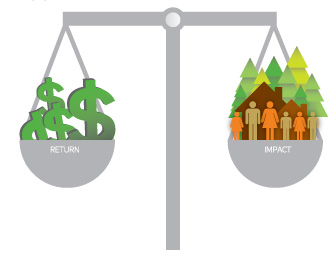
An area that I’m intrigued about is impact investing. I stumbled upon this concept a few months ago, and I think this kind of investing is the way venture capitalists and other investors will be thinking about their returns exclusively in the next 5 years.

What is impact investing? Investors, whether individual angels or FINRA accredited investors, identify a return on the investment that they expect to see before giving money to a worthy recipient. In the past, that return has simply been measured in terms of the % increase of the valuation of the company, seeing their stake in the game rise and therefore, the return greater. Impact investing, however, changes the kind of return on investment expected to include non-tangible or social-impact type metrics.

Plenty of funds and individuals are already doing this. There are whole companies, like the Acumen Fund, that are structured around impact investments. Individual investments are measured based on sector, but include things like number of children educated or acres of organic crop planted, instead of just % yield on money.

As we think about entrepreneurship, I can’t imagine that the world of business will begin to measure ROI without measuring other impact metrics. If anyone knows about impact investing and would be willing to tell me more, I’d love to learn. Message me on twitter @ellenjdasilva.

Quick addition: My friend pointed me to an incredibly useful guide her organization created to understand impact investing. Check it out here.

Impact Investing

Have An Opinion

Illustration - raised hands

This post is a precursor to a series I will start on Thursday about how to be a great analyst.

I worked at an investment bank after college and despite the merits/downsides that someone like Kevin Roose talks about in Young Money, it was a formidable experience laying a great professional groundwork for me. The one major detriment when I came out of it, however, was that I lacked the professional confidence to form an opinion.

Those who know me know that I am never one to shy away from expressing my thoughts. To put it generously, I’m opinionated about pretty much everything. But toward the end of my time on the trading floor, a managing director and desk leader asked for my opinion on something during a meeting in front of a large group. I was speechless: I’d been doing the same thing over and over again for two years and no one had solicited my advice, so I hadn’t even bothered to form subjective thoughts on the matter. That was a big mistake.

The technology world is a slightly more egalitarian system. Age is not a correlation for success or capitalization on ideas (in fact, the converse is more often true). It’s also a world of rapid innovation, and with fast change comes a huge opportunity to jump in headfirst. Forming an opinion is one of the most important ways to rise to a challenge and step up to a leadership position.

Forming an opinion is a gut reaction that keeps you attuned to your surroundings. Know how you feel about that new product or the updated color scheme. It’s as simple as that. Reading commentary can help shape or inform an opinion, but ordinarily it’s entirely your own. By having an opinion, it shows that you are well-researched and insightful enough to digest what you have gleaned in order to make it your own. In interviews, I often ask for people’s opinions on various trends or products just to see how they process information.

In addition, forming an opinion is one of the many ways you can be an excellent analyst or more-junior contributor. If you feel strongly about something, it will motivate you to work toward your passions, and it will demonstrate that you add value by intelligently understanding your surroundings.

But be compromising. Argue your point in a tactful way and back it up with data or concrete examples if possible. And then listen. Your opinion isn’t the only one in the room and it’s as subjective as anything else; there’s no right answer and you should remain open-minded to incorporating others’ philosophies into your own. Don’t make enemies over your opinions.

Have An Opinion

Making A Mistake

giphy

Nobody’s perfect, as the adage goes (I beg to differ, but that’s another story). We all make mistakes both personal and professional, and hopefully we are not remembered or defined by most of those mistakes.  But making professional mistakes happen , as my friend @marktemple says, “you learn more from your mistakes than what you do correctly.”

Artfully handling mistakes in a professional setting, however, is a different set of challenges. For starters, there are two ways to come across a mistake.

  1. Discover it yourself
  2. Have someone call you out

1. If we dive into the first: discovering a mistake yourself, you might think this is the more favorable of the two outcomes. You’re clearly a keen observer who made a simple error. The moment you notice it, that feeling sinks to the bottom of your stomach and your mind starts racing.

In my experience, the best way to approach the situation is to tell someone right away. While your natural inclination might be to try to mask the mistake, you are likely to dig yourself into a bigger hole. Avoid this route at all costs: even if you might be able to make it out alive, it’s dishonest and almost always comes back to haunt you. The best person to notify is a supervisor, or someone more senior to you who is directly related to the project.

No matter how big or small the mistake, the ability to fall on your sword and admit fault will show not only humility, but also professional maturity. A manager will be happier to be alerted to the mistake so that he or she is fully aware of all of the possible outcomes. In addition, your manager will probably be able to help you navigate correcting that mistake. You’ll learn a lot from it, and will get professional credibility in the process.

2. Getting called out is slightly different, since you have less time to prepare. I’ve been in situations that involve public chastisement for mistakes, and others that have been subtle pings or emails nudging me in the right direction. It stings either way; but you have to brace for the fall.

The best way to handle a situation like this is first to listen, then to probe and make sure you understand the right answer, and finally make the appropriate or suggested changes. In most circumstances, apologizing is not necessary. We all make mistakes – and handling the feedback gracefully will make you stand out among your peers. Treat being called out as receiving feedback (more to come on this topic soon), and seek to understand what you did wrong and learn from it.

What not to do:

Under no circumstance should you ever get defensive or try to defend your point. If you’re wrong, it’s better to admit fault than to argue something fruitlessly. If indeed you feel you were correct, then it’s fine to stand up for your beliefs. But if it’s a matter of subjectivity, take the high road. The argument is never worth it.

Worst of all? No one catches the mistake until after the final version of the project, or never at all! You never learn from that error, and you run the risk of making it again.

What do you think? Let me know @ellenjdasilva or email me ellenjdasilva at gmail dot com

Making A Mistake

International Women’s Day: Inspiring Change

happy-international-womens-day-2014

This past Saturday was International Women’s Day. Google celebrated with a powerful doodle (and YouTube clip featuring Malala). According to the IWD organization, the theme this year is “Inspiring Change,” and the premise is that women have made great strides in many areas, but remain unequal. There are so many political, economic and social hurdles around the world that women face, and International Women’s Day does a fantastic job of commemorating and combating these struggles.

I feel lucky as a woman that I have equality it many facets of my life. I don’t take these liberties for granted (and this applies to all of my freedoms, having been lucky enough to be born in the United States). But those who know me well know that I also take to heart the importance of women’s equality, especially in the workplace, and this year’s International Women’s Day theme has particular importance in 2014.

The industry broadly defined as “tech” is revolutionizing every aspect of the world: the way we communicate, the way we pay for items, the way we transport ourselves from point A to point B. It’s practically the job of the “tech” industry to inspire change, or people to challenge and change the way we approach problem-solving.

As a result, I also believe it’s the job of this industry to inspire change to solve this particular problem of inequality. I feel lucky to have surrounded myself with such positive female role models in and around Silicon Valley, and also in the world of Finance. But it’s amazing to me that with all of these powerful and influential women, inequality is still an issue.

I’m not going to propose a solution to the problem: it’s going to take time and effort from every walk of life and institution to get this issue straightened out. But it’s effort that must be taken.

Men: it’s your turn to champion these efforts alongside women. The women’s lib movement was pioneered by women who stood up and fought for a great cause, but it’s not only women who should be fighting for this equality. Without everyone on board, real change cannot occur.

Women: it’s time to defy the stereotypes – there’s no right answer here. Take risks, raise your hand, and speak up when you see inequality. That’s a great start to actually make change.


International Women’s Day: Inspiring Change

My Favorite New Disruption: Literature

xiSS8E7

(photo courtesy of HuffPost)

I’ve mentioned it on several occasions, but I am an avid reader. I read every night before I go to bed. I read on long car rides. On a week-long vacation, I average 3-4 books. My preference is fiction, but that doesn’t really matter right now.

Tech of the second decade of the 2000s is about disrupting: overturning an industry, a technology, or a way of thinking so that the old becomes antiquated and the new is a revolutionary efficiency. Increasingly, no industry is immune to the concept of disruption, and indeed it might be time that we leave no stone unturned when it comes to making life better.

This weekend, a friend and I were talking about books when he showed me an app that he said would change the way I read. I was skeptical: the content of literature is always being “disrupted” and other than the advent of e-books, I’m not sure what else in the world of reading could need to be revamped.

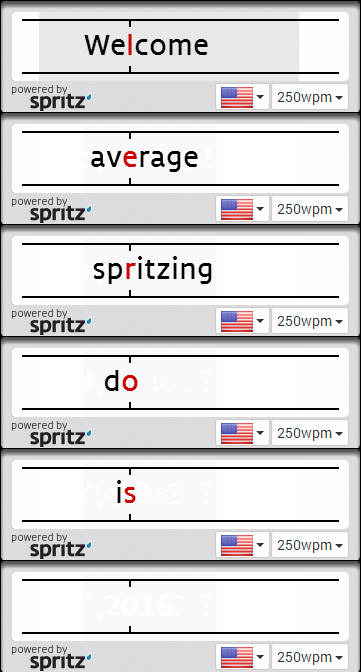
But then he showed me Spritz, a new app that helps readers speed read. The average reader with a college degree (me, for instance) reads somewhere around 200 words per minute (wpm). Spritz has a small screen and aligns a character in the center. The words cycle through quickly: the word count starts at 250wpm and can be set as high as 1000wpm. You see one word at a time, keeping your eyes fixated on the static point.

I have to confess I was intimidated. I like to think myself as a fast reader, but this thing schooled me. My friend set the bar high by starting me off at the 1,000wpm mark! I was scared that I wouldn’t retain what I learned or would want to go back to a word prior, but I actually found myself remembering the content as well as if I had my eyes scanning across a page from right to left.

One of the reasons I am so taken with this app is its originality in problem solving. The science behind it is clearly well-researched, but not challenging enough to intimidate the average user. It’s also appealing to people like me who care about being efficient with time and maximizing utility. In fact, I’d be likely to read more non-fiction if I had something to help me blitz through it. While this is not a space that I would think needed to be re-thought, Spritz is clearly making strides in getting us all to be faster readers.

A few thoughts I’ve been wondering about: how might this work in other non-alphabet languages? I took Chinese, and I doubt it would work well since each individual character is its own word. In addition, if you use spritz for long periods of time (let’s say 30 minutes or an hour), does your brain get tired from such stimulation? Do you need to go for periods of time at a slower pace (200wpm) before you can pick it back up again, much like running a marathon rather than a sprint? If you have answers or more thoughts, email me ellenjdasilva@, or tweet @ me.

Now, if anyone has access to a beta version that they’d like to invite me to use….

My Favorite New Disruption: Literature

Getting Organized

Screen Shot 2014-02-19 at 4.58.39 PM

Those who know me know that I’m very up tight about remaining organized. I catalogue and then throw away all papers. My desktop is empty (picture as evidence!). I delete a lot of files after I’ve used them, and I generally eschew clutter. But there are plenty of tools and tips I follow in order to maintain digital cleanliness and organization. I find that these also make me more productive and manage my time and space.

1. Create folders for everything with a file hierarchy: While this could be true for physical papers, ensure this is true for your files. For example, I work in Business Ops at Twitter. I have a folder in my “Documents” called “Business Ops.” Underneath that, I have several folders for different types of projects. Within those, I have folders with every project name and those contain all of the files relevant to that project. Folders should be as specific as possible and only contain files directly relevant to the title of the folder.

2. Use Box: why store anything locally? Whether you’re using a personal computer, borrowing a friend’s laptop for a moment or giving a presentation on a company’s hardware, none of your files should be stored locally. It’s a risk and a waste of time. As long as you keep your drive orderly, it will ensure longevity of your files. Plus, if you download their sweet new mobile app they give you 50GBs of storage.

3. Keep a to-do list: I use the tasks widget on Google labs so that my to-do list is always present. Keep it up-to-date (I update mine every morning) and don’t be bashful about crossing things off the list as you complete them. Occasionally, it’s nice to look back and see a list with most of it crossed off.

4. Throw away what you don’t use: don’t keep unnecessary papers or files. If you think you’re going to use them again, store them in their proper place. And clean out your “downloads” folder. There’s probably a haunted-house worth of spookiness in there.

5. Unsubscribe from anything you don’t care about: Those emails from that time you randomly donated to that half-marathon your friend ran? Go away. I use unroll.me to cleanse my inbox, but I actually did a purge and unsubscribed to just about everything. I have achieved inbox zen and I am much better at responding to emails that come directly to me as a result. For the record, I am not a huge fan of Gmail’s new inbox layout with the separate tabs, but so be it.

6. Add every engagement directly to your calendar: I used to be a huge flake because I didn’t write anything down. Now, I use super.cc to include everything I could ever need to my calendar. I’m much better about planning, even the casual coffees and meetings.

There are tons of other sources and tips for keeping organized and I’d love to hear them. Tweet @ me @ellenjdasilva or comment here if you have thoughts.

Getting Organized